
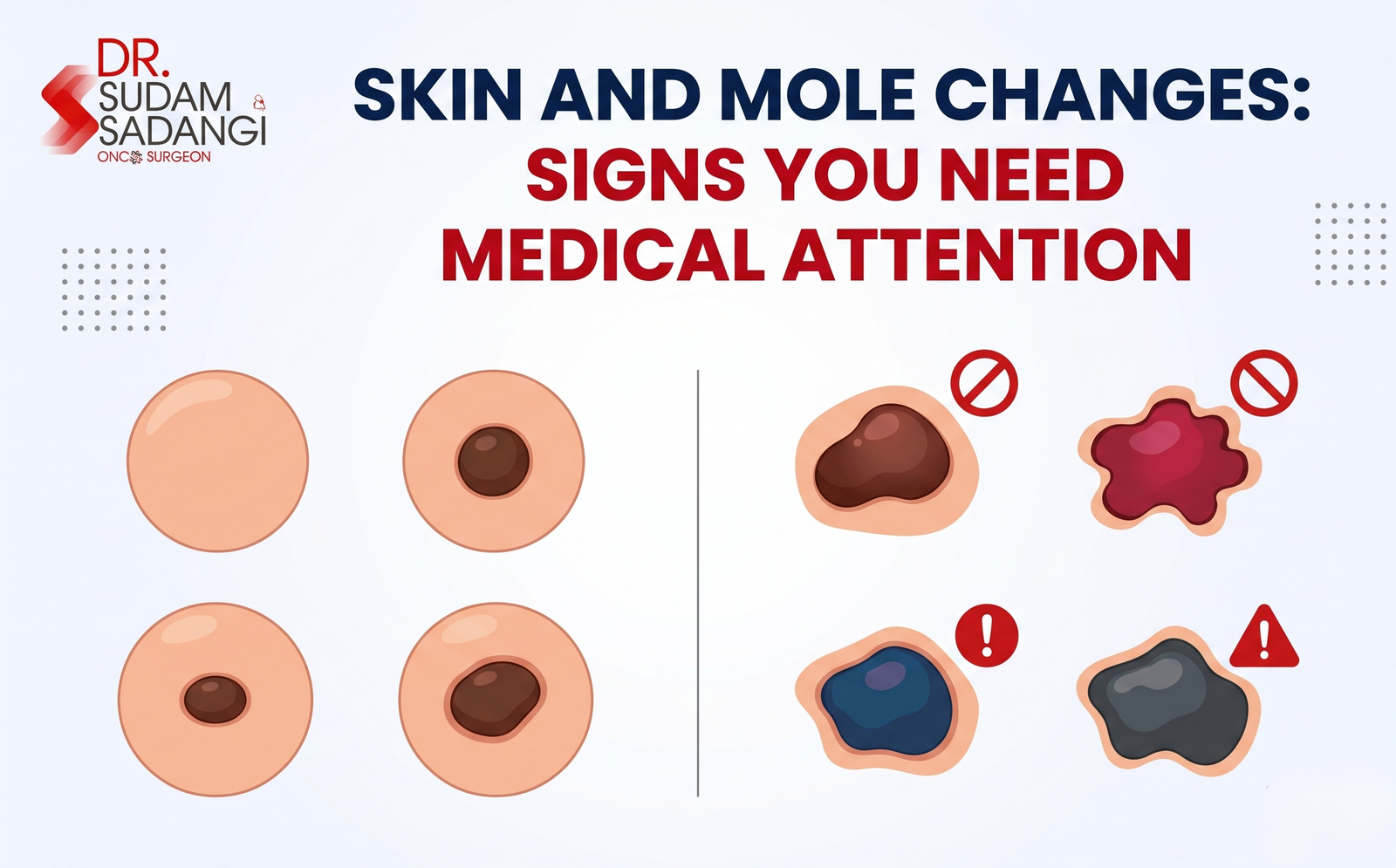
Recognizing early skin cancer signs is important for detecting serious skin conditions before they become advanced. Many people ignore skin changes such as unusual spots, persistent sores, or rapidly changing moles because they appear painless at first. However, certain mole warning signs like irregular borders, bleeding, or color variation may indicate underlying skin cancer. Doctors may recommend a skin biopsy to examine suspicious lesions and confirm an accurate diagnosis for early treatment.
Common skin cancer signs include persistent skin changes, irregular changing moles, and unusual mole warning signs that continue to evolve over time. In many cases, doctors perform a skin biopsy to evaluate suspicious lesions and confirm whether cancer cells are present. Early detection of skin cancer signs, careful monitoring of changing moles, recognition of abnormal skin changes, and timely evaluation of mole warning signs can improve treatment success and reduce complications. Proper medical assessment with a skin biopsy also helps guide accurate diagnosis and treatment planning.
People should never ignore persistent skin cancer signs such as unusual skin changes, dark spots, or rapidly changing moles that continue to grow or bleed. Certain mole warning signs including irregular borders, uneven color, and non-healing sores may require immediate medical attention. Doctors often recommend a skin biopsy when suspicious skin cancer signs or abnormal skin changes appear during examination. Early monitoring of changing moles, recognition of serious mole warning signs, and timely evaluation through skin biopsy can greatly improve treatment outcomes and support early cancer detection.
What Are Changes in Moles or Skin?
Changes in the skin can sometimes be an early warning sign of skin cancer. Although many moles and skin marks are harmless, certain changes should never be ignored.
As a result, recognizing unusual skin changes early can help detect cancer at a treatable stage.
Common areas affected include:
- Face
- Neck
- Arms and hands
- Back
- Legs
- Scalp
Moreover, skin cancer can develop in both sun-exposed and non-exposed areas.
Why Monitoring Skin Changes Is Important
The skin often shows visible warning signs before cancer progresses. Therefore, paying attention to new or changing spots is extremely important.
Early detection helps to:
- Identify suspicious growths quickly
- Prevent cancer from spreading
- Improve treatment success
- Reduce complications
In addition, regular self-examination increases awareness of normal skin appearance.
Common Warning Signs of Skin Cancer
Certain skin changes may indicate an underlying cancerous condition. However, many people ignore these signs because they appear painless initially.
Important warning signs include:
- A mole changing in size or color
- Irregular or uneven borders
- Bleeding or crusting skin lesions
- Persistent itching
- New dark spots on the skin
- A sore that does not heal
Therefore, any unusual or persistent skin change should be evaluated by a doctor.
Understanding the ABCDE Rule
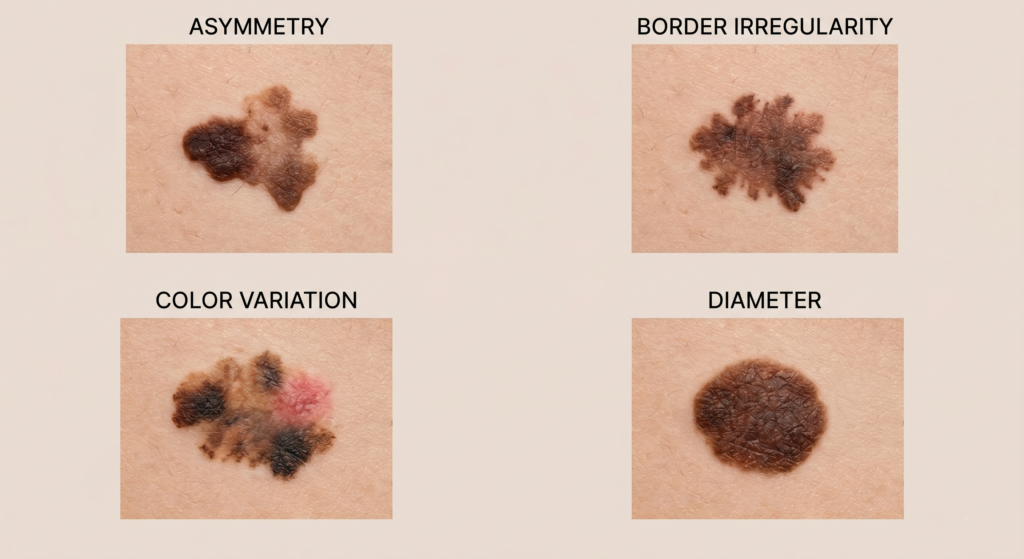
Doctors often use the ABCDE rule to identify suspicious moles and skin lesions.
Warning features include:
- A – Asymmetry: One half does not match the other
- B – Border: Edges appear irregular or blurred
- C – Color: Multiple colors or uneven shades
- D – Diameter: Larger than 6 mm
- E – Evolving: Changes over time
As a result, monitoring these features can help detect skin cancer early.
Moles That Should Not Be Ignored
Most moles remain harmless throughout life. However, some changes may indicate melanoma or other forms of skin cancer.
Seek medical advice if a mole:
- Grows rapidly
- Becomes painful
- Starts bleeding
- Develops uneven texture
- Changes shape suddenly
In addition, new moles appearing in adulthood should also be examined carefully.
Skin Sores That Don’t Heal
A wound or sore that does not heal properly can sometimes signal skin cancer. Although minor cuts usually heal within weeks, cancer-related sores may persist for months.
Possible warning signs include:
- Repeated bleeding
- Crusting or scabbing
- Continuous irritation
- Slow healing despite treatment
Because of this, persistent sores should never be neglected.
Who Is at Higher Risk?
Certain individuals have a higher chance of developing skin cancer. Therefore, awareness and regular check-ups are especially important for them.
Higher risk factors include:
- Excessive sun exposure
- Fair or sensitive skin
- Family history of skin cancer
- Frequent tanning exposure
- Weakened immune system
Moreover, people working outdoors for long hours may also face increased risk.
How Skin Cancer Is Diagnosed
Doctors may perform several tests to evaluate suspicious skin changes.
These may include:
- Physical skin examination
- Dermatoscopy
- Skin biopsy
- Imaging tests if needed
As a result, early-stage skin cancers can often be treated successfully with minimal complications.
Benefits of Early Detection
Detecting skin cancer early greatly improves treatment outcomes and recovery.
Key benefits include:
- Higher cure rates
- Smaller surgical procedures
- Reduced spread of cancer
- Faster recovery time
- Better cosmetic outcomes
Hence, regular skin monitoring plays a major role in cancer prevention and care.
Final Thoughts
Changes in moles or skin should never be ignored, especially when they continue to evolve over time. By staying alert to warning signs like irregular borders, color changes, or non-healing sores, individuals can seek timely medical care and improve treatment success.
Regular skin examinations and early consultation can make a significant difference in detecting skin cancer at an early stage.
Book a Consultation with Dr. Sudam Sadangi Today
If you notice unusual skin changes, persistent sores, or changing moles, expert evaluation can help with early diagnosis and proper treatment.
📞Call for Appointment: +91 7854841519
📍Location: IMS & SUM Hospital, Bhubaneswar, Odisha
📧 Email: sudamscb@gmail.com
Early attention to skin warning signs can help protect long-term health and save lives.