
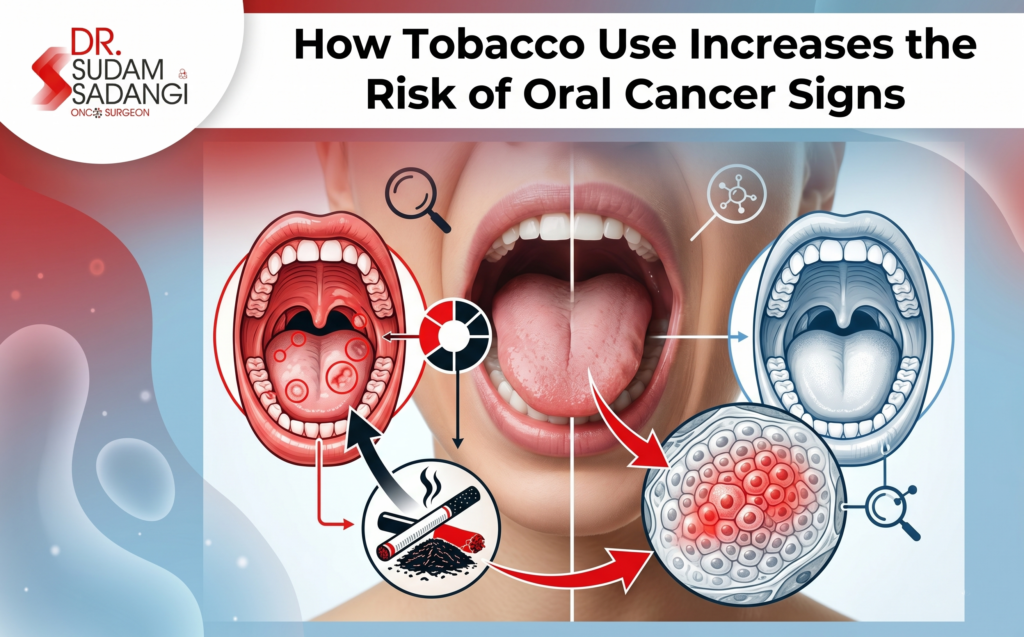
Recognizing early oral cancer signs is extremely important, especially for tobacco users who face a much higher risk of developing serious oral diseases. Persistent mouth ulcer problems, unusual mouth patches, and unexplained pain inside the mouth may be early symptoms of mouth cancer. In many cases, these warning signs appear painless at first, causing people to ignore them. Early diagnosis and timely treatment can greatly improve recovery and reduce complications related to oral cancer.
Common oral cancer signs include a persistent mouth ulcer, abnormal mouth patches, and swelling inside the mouth that does not heal properly. Many tobacco users develop early symptoms of mouth cancer due to long-term exposure to harmful chemicals. Early evaluation of oral cancer signs, proper examination of a suspicious mouth ulcer, monitoring of unusual mouth patches, and regular screening for mouth cancer are especially important for tobacco users. Timely treatment can improve recovery and reduce the spread of oral cancer.
People should never ignore persistent oral cancer signs such as a painful mouth ulcer, bleeding sores, or unusual mouth patches inside the mouth. Long-term tobacco users are at significantly higher risk of developing mouth cancer due to continuous irritation of oral tissues. Early detection of oral cancer signs, careful evaluation of a non-healing mouth ulcer, and monitoring of abnormal mouth patches can help diagnose mouth cancer before it becomes advanced. Regular oral screening is especially important for tobacco users to improve treatment success and long-term recovery.
What Is Oral Cancer?
Oral cancer refers to cancer that develops in the mouth, tongue, lips, gums, cheeks, or throat area. Tobacco users are at a much higher risk because harmful chemicals in tobacco can damage the cells inside the mouth over time.
As a result, early detection becomes extremely important for successful treatment and recovery.
Oral cancer can affect:
- Tongue
- Inner cheeks
- Gums
- Lips
- Roof or floor of the mouth
- Throat region
In many cases, the early signs are painless. Therefore, people often ignore them until the disease progresses.
Why Tobacco Users Are at Higher Risk
Tobacco is one of the leading causes of oral cancer. Both smoking and smokeless tobacco products can seriously damage oral tissues.
Common tobacco habits linked to oral cancer include:
- Cigarette smoking
- Bidi smoking
- Gutkha use
- Khaini and pan masala chewing
- Cigar or pipe smoking
In addition, alcohol consumption along with tobacco further increases the risk significantly.
Early Signs of Oral Cancer
Recognizing warning signs early can help detect cancer before it spreads. Therefore, tobacco users should regularly check for changes inside the mouth.
Common early symptoms include:
- A mouth ulcer that does not heal
- White or red patches inside the mouth
- Persistent mouth pain
- Difficulty swallowing
- Loose teeth without dental cause
- Lump or thickening inside the cheek
- Burning sensation in the mouth
Moreover, persistent bad breath or changes in voice should not be ignored.
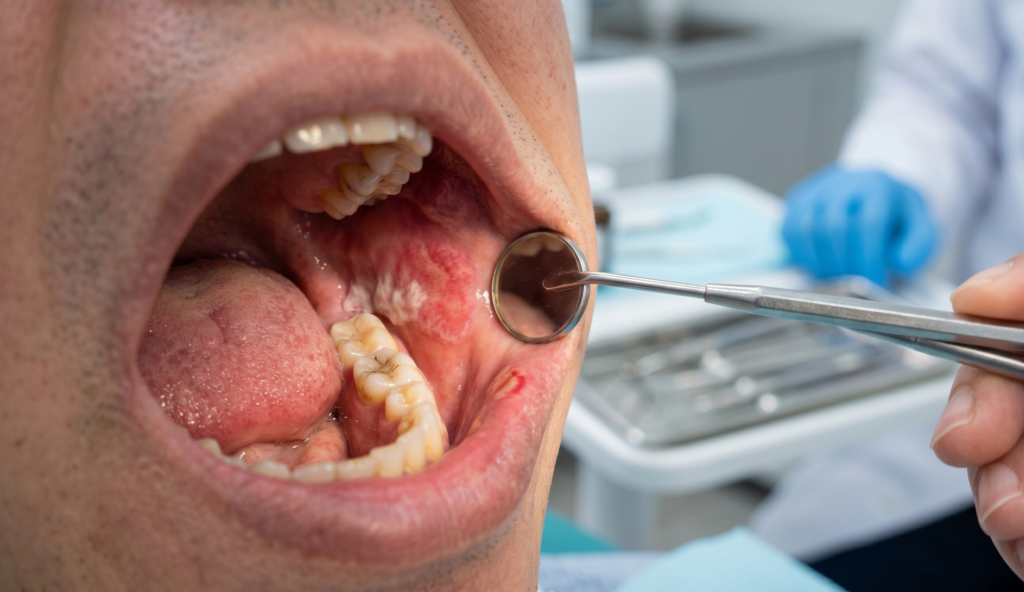
Mouth Ulcers That Don’t Heal
A non-healing ulcer is one of the most common warning signs of oral cancer. Normally, mouth ulcers heal within two weeks. However, ulcers related to cancer may persist longer.
Warning features include:
- Bleeding from the ulcer
- Pain while eating
- Hard edges around the sore
- Gradually increasing size
Because of this, any ulcer lasting more than two weeks should be examined by a doctor.
White and Red Patches Inside the Mouth
Abnormal patches can appear before oral cancer develops fully. These patches may not cause pain initially, which makes them easy to overlook.
Types include:
- White patches (Leukoplakia)
- Red patches (Erythroplakia)
- Mixed red and white areas
In some cases, these changes may become cancerous over time if left untreated.
Difficulty in Swallowing or Speaking
As oral cancer progresses, it can affect normal mouth and throat movements. Therefore, people may notice discomfort while swallowing or speaking.
Symptoms may include:
- Pain during swallowing
- Feeling of something stuck in the throat
- Difficulty moving the tongue
- Slurred speech
In addition, persistent throat irritation should also be evaluated.
When to See a Doctor
Many people delay medical consultation because the symptoms seem minor initially. However, early diagnosis can greatly improve treatment success.
Seek medical attention if you notice:
- Symptoms lasting more than two weeks
- Unexplained mouth bleeding
- Persistent swelling or lumps
- Continuous pain or burning sensation
- Sudden voice changes
Therefore, regular oral examinations are especially important for tobacco users.
How Oral Cancer Is Diagnosed
Doctors may recommend several tests to confirm oral cancer and assess its stage.
Common diagnostic methods include:
- Physical oral examination
- Biopsy of suspicious areas
- CT scan or MRI
- Endoscopy if needed
As a result, early-stage cancer can often be treated more effectively and with fewer complications.
Benefits of Early Detection
Detecting oral cancer early offers major advantages in treatment and recovery.
These include:
- Higher survival rates
- Less extensive surgery
- Better quality of life
- Faster recovery
- Lower treatment complications
Hence, awareness and timely screening can save lives.
Final Thoughts
Oral cancer is common among tobacco users, but early warning signs often appear before the disease becomes advanced. By paying attention to persistent ulcers, abnormal patches, and swallowing difficulties, individuals can seek treatment at the right time.
Avoiding tobacco and undergoing regular oral check-ups can significantly reduce the risk of serious complications.
Book a Consultation with Dr. Sudam Sadangi Today
If you notice persistent mouth ulcers, unusual patches, or other warning signs, early medical evaluation is essential for proper diagnosis and treatment.
📞Call for Appointment: +91 7854841519
📍Location: IMS & SUM Hospital, Bhubaneswar, Odisha
📧 Email: sudamscb@gmail.com
Early detection and timely treatment can make a life-changing difference in oral cancer care.