
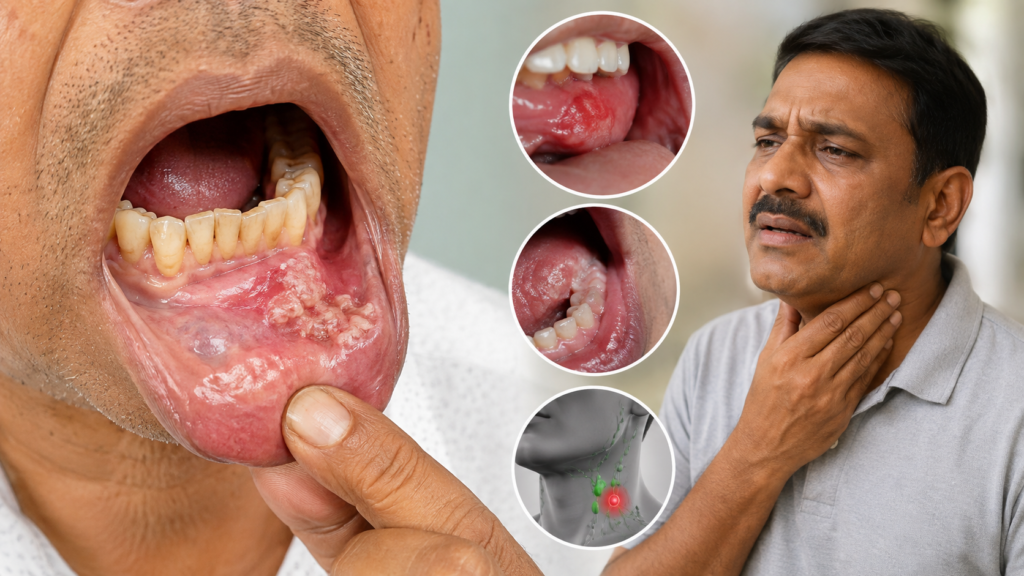
Oral cancer is a type of cancer that develops in the mouth or oral cavity. It can affect the lips, tongue, gums, inner cheeks, roof of the mouth, and the floor of the mouth. Most oral cavity cancers begin in the thin cells that line these areas.
In many cases, oral cancer may first appear as a small sore, patch, lump, or change inside the mouth. These changes can sometimes look like common mouth problems. Therefore, knowing the early warning signs is important.
Early diagnosis can help doctors identify the cancer before it becomes more advanced. So, persistent changes in the mouth should not be ignored.
What Is Oral Cancer?
Oral cancer is cancer that develops in the tissues of the mouth. It is also called oral cavity cancer. It may develop on the lips, tongue, gums, inner lining of the cheeks, floor of the mouth, or roof of the mouth.
Most oral cancers are squamous cell carcinomas. These cancers begin in the thin, flat cells that line the inside of the mouth.
Oral cancer is different from every other type of head and neck cancer. For example, cancer that starts in the throat behind the mouth is called oropharyngeal cancer.
Therefore, the exact location of the cancer is important when planning diagnosis and treatment.
What Are the Early Warning Signs of Oral Cancer?
Oral cancer may cause different symptoms depending on where it develops. However, some warning signs are more common than others.
Possible early warning signs include:
- A mouth sore that does not heal
- A white or red patch inside the mouth
- A lump or thick area in the mouth or cheek
- Persistent mouth pain
- Unexplained bleeding in the mouth
- Numbness of the tongue, lip, or other area of the mouth
- Difficulty chewing or swallowing
- Difficulty moving the tongue or jaw
- Loose teeth without an obvious reason
- Changes in the way dentures fit
- Persistent swelling in the mouth or jaw
- A lump in the neck
- Persistent sore throat
- Ear pain without a clear ear problem
- Unexplained weight loss
However, these symptoms do not always mean cancer. They can also occur due to infections, dental problems, injuries, or other conditions.
Therefore, any unusual change that continues for more than a few weeks should be checked by a doctor or dentist.
How Does Oral Cancer Develop?
Cancer develops when cells undergo changes that cause them to grow and divide in an uncontrolled way.
Over time, these abnormal cells can form a tumor. If the cancer is not detected and treated, it may grow into nearby tissues or spread to other parts of the body.
However, the exact cause of every oral cancer is not always known.
Several factors can increase the chance of developing oral cancer. These include tobacco use, alcohol use, certain HPV infections, and chewing betel quid.
What Are the Main Causes and Risk Factors for Oral Cancer?
There is usually no single cause of oral cancer. Instead, several factors may increase a person’s risk.
Important risk factors include:
- Smoking cigarettes or other tobacco products
- Chewing tobacco
- Chewing betel quid or areca nut preparations
- Heavy alcohol use
- Certain human papillomavirus (HPV) infections
- Previous head and neck cancer
- Long-term exposure to certain risk factors
Tobacco is one of the most important preventable risk factors for cancers of the oral cavity and related areas.
Moreover, using tobacco and alcohol together can increase the risk more than either exposure alone.
Therefore, avoiding tobacco and limiting alcohol can help reduce the risk of oral and other head and neck cancers.
Can Tobacco Cause Oral Cancer?
Yes. Tobacco use is strongly linked with oral cancer.
Smoking exposes the tissues of the mouth to many cancer-causing chemicals. Similarly, smokeless tobacco can expose the mouth to harmful substances for long periods.
Tobacco use can affect areas such as the lips, tongue, gums, cheeks, and other parts of the oral cavity.
Therefore, quitting tobacco is one of the most important steps a person can take to lower their risk.
It is never too late to stop. Quitting tobacco can provide health benefits even after years of use.
Can Alcohol Increase the Risk of Oral Cancer?
Yes. Alcohol use is another important risk factor for oral and head and neck cancers.
Regular heavy alcohol use can damage the cells lining the mouth and throat. The risk can be higher when alcohol use occurs together with tobacco use.
Therefore, reducing alcohol intake and avoiding tobacco can be an important part of cancer prevention.
Does Chewing Tobacco or Betel Nut Increase Oral Cancer Risk?
Yes. Chewing tobacco and betel quid are important risk factors for oral cancer.
Betel quid is used in several parts of Asia and may contain areca nut. Long-term use has been linked with cancers of the oral cavity.
Because these products are often kept in the mouth for extended periods, the oral tissues can have prolonged exposure to harmful substances.
Therefore, avoiding tobacco, areca nut, and betel quid products is strongly recommended.
Can HPV Cause Oral or Throat Cancer?
Certain types of human papillomavirus, or HPV, can increase the risk of oropharyngeal cancer. This cancer develops in the middle part of the throat, including areas such as the tonsils and the back of the tongue.
However, HPV-related cancers are not the same as every type of oral cavity cancer.
Therefore, it is important to identify the exact location and type of cancer before discussing its cause or treatment.
How Is Oral Cancer Diagnosed?
If a doctor or dentist finds a suspicious area, further evaluation may be needed.
The assessment may include:
- Examination of the mouth and neck
- Examination of the tongue, gums, cheeks, and other oral tissues
- Review of symptoms and medical history
- Imaging tests when required
- Biopsy of a suspicious area
- Tests to determine the stage of the cancer
A biopsy is often important because it allows a pathologist to examine tissue under a microscope and determine whether cancer cells are present.
Moreover, additional tests may be used to understand how far the cancer has spread and to help plan treatment.
Why Is a Biopsy Important for Oral Cancer?
A biopsy involves removing a small sample of tissue from a suspicious area.
The sample is then examined by a pathologist.
A biopsy can help determine whether the abnormal area is cancerous and can provide information about the type of cancer.
Therefore, a biopsy is an important step when an examination shows a suspicious lesion.
Not every mouth sore or white patch is cancer. However, a persistent or suspicious lesion should be properly evaluated rather than diagnosed based only on appearance.
How Is Oral Cancer Staged?
After oral cancer is diagnosed, doctors determine its stage.
Staging helps doctors understand:
- The size of the tumor
- Whether nearby tissues are involved
- Whether lymph nodes contain cancer cells
- Whether the cancer has spread to distant parts of the body
The stage is important because treatment options can vary depending on how advanced the cancer is.
Therefore, doctors usually consider the biopsy results, physical examination, imaging findings, lymph node status, and other relevant information before creating a treatment plan.
What Are the Treatment Options for Oral Cancer?
Treatment depends on several factors, including the location and size of the tumor, cancer stage, overall health, and other features of the cancer.
Treatment may include:
- Surgery
- Radiation therapy
- Chemotherapy
- Targeted therapy
- Immunotherapy
- A combination of treatments
Surgery is commonly used for many cancers of the oral cavity, particularly when the tumor can be removed safely. Radiation therapy may be used alone or together with surgery or other treatments, depending on the situation.
Therefore, treatment is planned individually rather than using one approach for every patient.
When Is Surgery Needed for Oral Cancer?
Surgery may be recommended when the cancer can be removed completely or when surgery can provide important control of the disease.
Depending on the location and size of the tumor, surgery may involve removing the tumor along with a margin of nearby tissue.
In some cases, nearby lymph nodes may also need to be evaluated or removed.
The exact procedure depends on where the cancer is located and how far it has spread.
Therefore, an experienced head and neck or onco surgeon can help determine the most suitable surgical approach.
When Is Radiation Therapy Used?
Radiation therapy uses high-energy radiation to destroy cancer cells.
It may be recommended after surgery when there is a higher risk that cancer cells could remain. It may also be used as part of the main treatment in selected cases.
Radiation treatment is planned carefully so that the cancer receives the required dose while nearby healthy tissues are protected as much as possible.
However, radiation therapy can cause side effects, including mouth and throat problems, depending on the treatment area and dose.
Therefore, patients should discuss expected benefits and possible side effects with their cancer care team.
Can Chemotherapy Be Used for Oral Cancer?
Chemotherapy uses medicines to destroy or control cancer cells.
It may be used in combination with radiation therapy or other treatments for selected patients.
The need for chemotherapy depends on the cancer type, stage, treatment plan, and overall health of the patient.
Therefore, chemotherapy is not required for every person with oral cancer.
What Is Targeted Therapy?
Targeted therapy uses medicines designed to act on specific features of cancer cells.
These treatments may be considered when the cancer has certain molecular or biological characteristics.
Because targeted treatment depends on the features of the cancer, additional laboratory or molecular tests may sometimes be needed.
Therefore, the treatment plan may change based on information obtained from the tumor.
What Is Immunotherapy?
Immunotherapy helps the body’s immune system recognize and fight cancer cells.
It may be considered for certain advanced or recurrent head and neck cancers.
However, immunotherapy is not suitable for every patient.
Doctors consider factors such as the cancer type, stage, previous treatment, overall health, and specific tumor characteristics before recommending it.
Can Oral Cancer Be Prevented?
Not every case of oral cancer can be prevented. However, reducing known risk factors can lower the risk.
Helpful steps include:
- Avoid tobacco in all forms
- Avoid chewing tobacco and betel quid
- Avoid areca nut products
- Limit alcohol use
- Maintain good oral hygiene
- Attend regular dental check-ups
- Report persistent mouth changes early
- Discuss appropriate HPV prevention with a healthcare professional
Most importantly, do not ignore a mouth sore, patch, lump, or other unusual change that does not improve.
When Should You See a Doctor or Dentist?
You should seek medical advice if you notice a mouth or throat problem that persists or keeps getting worse.
You should especially seek evaluation for:
- A mouth sore that does not heal
- A persistent red or white patch
- A lump inside the mouth or neck
- Unexplained bleeding
- Persistent mouth pain
- Difficulty swallowing
- Difficulty moving the tongue or jaw
- Numbness in the mouth or tongue
- Persistent voice changes
- Unexplained weight loss
Many of these symptoms can have causes other than cancer. Nevertheless, getting them checked early can help identify the correct cause and begin treatment when needed.
Why Is Early Detection Important?
Oral cancer can sometimes be easier to treat when it is found before it has spread extensively.
Early evaluation also gives doctors more information about the disease and the available treatment options.
However, a symptom does not automatically mean cancer.
Therefore, the goal is not to create fear but to encourage timely medical evaluation of persistent or unusual changes.
What Happens After Oral Cancer Treatment?
Follow-up care remains important after treatment.
Doctors may monitor the mouth, neck, and other relevant areas for signs of recurrence. Follow-up can also help identify treatment-related problems.
Depending on the treatment received, patients may need support for issues such as:
- Eating and swallowing
- Speech
- Dental health
- Dry mouth
- Changes in taste
- Mouth discomfort
Radiation and some other cancer treatments can cause mouth and throat side effects, so ongoing dental and medical care can be an important part of recovery.
Final Thoughts
Oral cancer can develop in different parts of the mouth, including the lips, tongue, gums, inner cheeks, and floor of the mouth. Although some symptoms may look like common dental or mouth problems, persistent changes should not be ignored.
Tobacco use, alcohol use, betel quid or areca nut use, and certain HPV infections can increase the risk of cancers affecting the mouth and throat.
Fortunately, oral cancer has several treatment options. Depending on the individual case, treatment may include surgery, radiation therapy, chemotherapy, targeted therapy, immunotherapy, or a combination of these approaches.
Therefore, if you notice a persistent mouth sore, unusual patch, lump, bleeding, numbness, or difficulty swallowing, consult a doctor or dentist for proper evaluation.
Book a Consultation with Dr. Sudam Sadangi Today
If you or a loved one has a persistent mouth lesion, unusual oral symptoms, or has been diagnosed with oral cancer, timely specialist evaluation can help you understand the condition and available treatment options.
Consult Dr. Sudam Sadangi, Onco Surgeon in Bhubaneswar, for expert cancer evaluation, surgical oncology care, and personalized treatment guidance.
📞 Call for Appointment: +91 7854841519
📍 Location: IMS & SUM Hospital, Bhubaneswar, Odisha
📧 Email: sudamscb@gmail.com
Early evaluation, accurate diagnosis, and timely treatment can play an important role in managing oral cancer and supporting better long-term care.
