
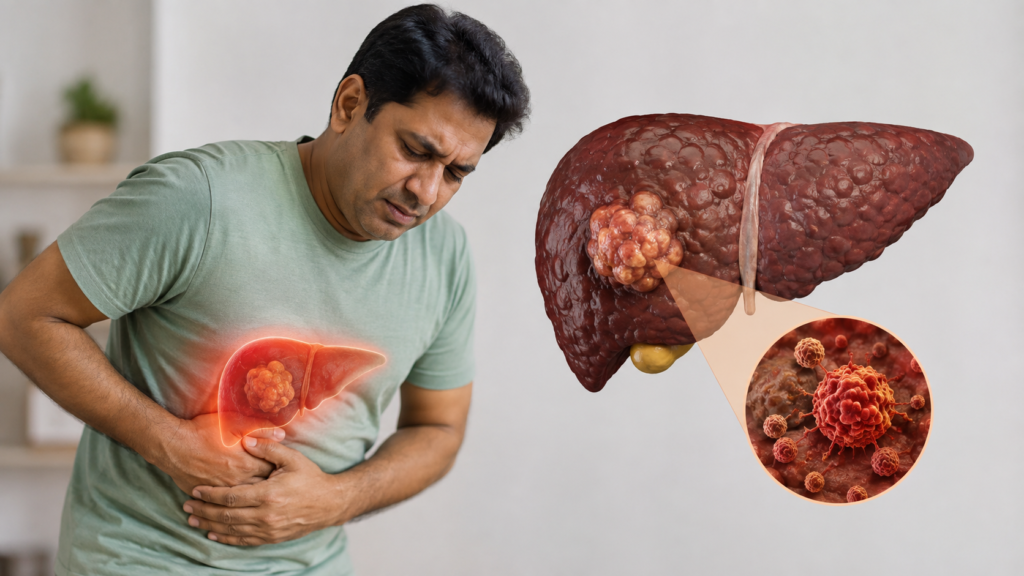
Liver cancer is a serious condition that starts in the liver. The most common type of primary liver cancer in adults is hepatocellular carcinoma, also called HCC. Another type is intrahepatic bile duct cancer, also known as cholangiocarcinoma.
Liver cancer may not cause clear symptoms in its early stages. As a result, some people are diagnosed only after the disease has progressed. However, knowing the warning signs and risk factors can help people seek medical advice sooner.
Therefore, regular medical care is especially important for people who have chronic liver disease, hepatitis, or cirrhosis.
What Is Liver Cancer?
Liver cancer occurs when abnormal cells in the liver begin to grow in an uncontrolled way and form a tumor.
The liver is located in the upper right part of the abdomen. It performs many important functions, including helping the body process nutrients, making proteins, and removing harmful substances from the blood.
There are different types of liver cancer. The most common primary liver cancer in adults is hepatocellular carcinoma (HCC).
Primary liver cancer begins in the liver itself. On the other hand, cancer that starts in another organ and later spreads to the liver is called secondary or metastatic liver cancer.
Therefore, doctors first determine where the cancer started before planning treatment.
What Are the Early Symptoms of Liver Cancer?
Liver cancer may not cause noticeable symptoms during its early stages. However, symptoms can appear as the tumor grows or affects liver function.
Possible symptoms include:
- Unexplained weight loss
- Loss of appetite
- Feeling full after eating a small amount
- Nausea or vomiting
- Pain or discomfort in the upper right abdomen
- A lump or fullness under the right ribs
- Swelling of the abdomen
- Yellowing of the skin or eyes
- Unusual tiredness or weakness
- Easy bruising or bleeding
- Fever
- Itching
- Dark urine
- Pale or chalky stools
However, these symptoms can also occur because of conditions other than cancer.
Therefore, persistent or unexplained symptoms should be evaluated by a doctor rather than ignored.
What Causes Liver Cancer?
There is not always one single cause of liver cancer.
However, long-term damage to the liver can increase the risk. Chronic hepatitis B or hepatitis C infection and cirrhosis are among the important risk factors for hepatocellular carcinoma.
Other factors can also increase the risk, including:
- Heavy alcohol use
- Tobacco use
- Excess body weight
- Type 2 diabetes
- Certain inherited conditions
- Exposure to aflatoxins
- Some rare diseases affecting the liver
Having a risk factor does not mean that a person will definitely develop liver cancer.
Nevertheless, reducing avoidable risk factors and managing chronic liver disease can be important for long-term liver health.
Can Hepatitis Cause Liver Cancer?
Yes. Chronic hepatitis B and hepatitis C infections can increase the risk of liver cancer.
These infections can cause long-term inflammation and damage to the liver. Over time, this damage may lead to fibrosis or cirrhosis and increase the chance of developing liver cancer.
Therefore, people with chronic hepatitis should follow their doctor’s advice regarding testing, monitoring, and treatment.
Can Cirrhosis Lead to Liver Cancer?
Cirrhosis means that healthy liver tissue has been replaced by scar tissue after long-term liver damage.
Cirrhosis is an important risk factor for hepatocellular carcinoma. Many people who develop liver cancer have underlying cirrhosis, although liver cancer can also occur without cirrhosis.
The causes of cirrhosis can include chronic viral hepatitis, long-term alcohol-related liver disease, metabolic liver disease, and certain other conditions.
Therefore, people with cirrhosis may require regular monitoring for liver cancer.
Who Is at Higher Risk of Liver Cancer?
Some people have a higher risk of developing liver cancer because of long-term liver disease or other risk factors.
Higher-risk groups may include people with:
- Chronic hepatitis B infection
- Chronic hepatitis C infection
- Cirrhosis
- Long-term heavy alcohol use
- Fatty liver disease associated with metabolic problems
- Type 2 diabetes
- Excess body weight
- Certain inherited liver conditions
- Long-term exposure to aflatoxins
However, liver cancer can sometimes occur in people without obvious risk factors.
Therefore, symptoms should not be ignored simply because a person does not have a known risk factor.
Can Liver Cancer Be Detected Early?
Liver cancer can be difficult to detect early because small tumors may not cause noticeable symptoms.
There is no widely recommended screening program for people at average risk. However, people at higher risk, such as those with cirrhosis or certain chronic hepatitis B infections, may be monitored using tests such as ultrasound and alpha-fetoprotein (AFP) blood testing according to medical advice.
Therefore, people with chronic liver disease should discuss an appropriate monitoring plan with their doctor.
How Is Liver Cancer Diagnosed?
If liver cancer is suspected, doctors may use several tests to understand what is happening.
These may include:
- Medical history and physical examination
- Liver function blood tests
- Alpha-fetoprotein (AFP) testing in selected cases
- Ultrasound
- CT scan
- MRI
- Other imaging tests
- Biopsy when needed
Imaging tests can provide important information about the size, location, and number of liver tumors.
A biopsy may be recommended in some situations, although it is not required for every suspected liver cancer diagnosis.
Therefore, the choice of tests depends on the individual patient’s condition and imaging findings.
What Is Alpha-Fetoprotein (AFP) in Liver Cancer?
Alpha-fetoprotein, or AFP, is a protein that can be measured through a blood test.
AFP levels may be higher in some people with liver cancer. However, an elevated AFP level does not automatically mean that a person has liver cancer.
Similarly, some people with liver cancer may have normal AFP levels.
Therefore, AFP is generally interpreted together with imaging and other clinical information rather than being used alone to diagnose liver cancer.
What Are the Stages of Liver Cancer?
Staging describes how much cancer is present and whether it has spread.
Doctors may use different staging systems for liver cancer. The Barcelona Clinic Liver Cancer (BCLC) system is widely used and considers factors such as the extent of the tumor, liver function, general health, and symptoms.
The BCLC system includes:
- Stage 0: Very early
- Stage A: Early
- Stage B: Intermediate
- Stage C: Advanced
- Stage D: End-stage
Doctors may also use the AJCC TNM system, which considers the tumor, nearby lymph nodes, and distant spread.
Therefore, the stage is not determined only by tumor size. Liver function and the person’s overall health are also important when planning treatment.
What Does Early-Stage Liver Cancer Mean?
Early-stage liver cancer generally means that the tumor is limited and may be suitable for treatments that can potentially control or remove the cancer.
Depending on the patient’s liver function and tumor characteristics, treatment options may include surgery, ablation, or liver transplantation.
However, not every early-stage tumor is suitable for the same treatment.
Therefore, doctors assess the tumor and the condition of the remaining liver before recommending a treatment plan.
What Does Advanced Liver Cancer Mean?
Advanced liver cancer may involve cancer that has grown into important blood vessels, spread to nearby lymph nodes, or spread to distant organs.
At this stage, surgery may not be able to remove all of the cancer.
However, several treatments can still help control the disease, slow its progression, and manage symptoms.
These may include immunotherapy, targeted therapy, radiation therapy, and other treatments depending on the individual case.
How Does Liver Function Affect Cancer Treatment?
The liver’s condition is an important part of treatment planning.
Some patients have liver cancer along with cirrhosis or other chronic liver disease. In such cases, doctors need to consider how well the liver is functioning before recommending major surgery or other treatments.
For example, the Child-Pugh system can be used to assess liver function in people with cirrhosis.
Therefore, two people with similar tumors may receive different treatment plans because their liver function or overall health is different.
What Are the Treatment Options for Liver Cancer?
Treatment depends on several factors, including:
- Cancer stage
- Tumor size and number
- Location of the tumor
- Blood vessel involvement
- Liver function
- Overall health
- Whether the cancer has spread
Treatment options may include:
- Surgery
- Liver transplantation
- Tumor ablation
- Embolization
- Radiation therapy
- Targeted therapy
- Immunotherapy
- Chemotherapy in selected situations
Doctors may also combine different treatments to achieve the best possible result.
When Is Liver Cancer Surgery Recommended?
Surgery may be considered when the tumor can be removed safely and enough healthy liver will remain.
A partial hepatectomy involves removing the part of the liver containing the tumor along with some surrounding tissue.
For selected patients with early liver cancer, surgery may offer a chance for long-term disease control or cure.
However, surgery is not suitable for every patient.
The size and location of the tumor, blood vessel involvement, liver function, and overall health all play an important role.
When Is a Liver Transplant Needed?
A liver transplant involves removing the diseased liver and replacing it with a healthy donor liver.
For selected patients with early liver cancer and significant underlying liver disease, transplantation may treat both the cancer and the severely damaged liver.
However, eligibility depends on several medical factors.
Patients may also need other treatments while waiting for a donor liver. These treatments can help control the cancer during the waiting period.
Therefore, transplant decisions are made by a specialized medical team after detailed evaluation.
What Is Ablation for Liver Cancer?
Ablation is a treatment that destroys the tumor without removing the entire section of the liver.
Different ablation techniques may be used. For example, radiofrequency ablation and microwave ablation use heat to destroy cancer cells.
Ablation may be suitable for selected small liver tumors, particularly when surgery is not the best option.
The suitability of ablation depends on the tumor’s size, location, number, and the patient’s overall health.
What Is Embolization Therapy?
Embolization is a treatment that blocks the blood supply to a liver tumor.
Some embolization procedures also deliver cancer treatment directly to the tumor. One example is transarterial chemoembolization, commonly called TACE.
Embolization may be considered for certain liver cancers that cannot be safely removed with surgery.
Therefore, an interventional oncology or cancer care team may evaluate whether this approach is appropriate.
Can Radiation Therapy Treat Liver Cancer?
Yes. Radiation therapy may be used for selected patients with liver cancer.
Modern techniques can focus radiation on the tumor while limiting exposure to nearby healthy tissues.
Radiation may be used when surgery or other local treatments are not suitable. It can also be used to control certain symptoms in advanced disease.
The treatment plan depends on the size and location of the tumor and the health of the remaining liver.
Can Immunotherapy Treat Liver Cancer?
Yes. Immunotherapy is an important treatment option for some patients with advanced liver cancer.
It works by helping the immune system recognize and attack cancer cells.
Several immunotherapy-based treatments may be considered depending on the patient’s condition, liver function, previous treatments, and other factors.
However, immunotherapy is not appropriate for every patient.
Therefore, the cancer care team should evaluate the individual case before recommending it.
What Is Targeted Therapy for Liver Cancer?
Targeted therapy uses medicines that act on specific features involved in cancer growth.
These medicines may be used for some patients with advanced liver cancer.
The choice of targeted treatment depends on the stage of the disease, liver function, previous treatment, and overall health.
Therefore, targeted therapy is selected as part of an individualized cancer treatment plan.
Can Liver Cancer Be Prevented?
Not every case of liver cancer can be prevented. However, several steps can help reduce the risk.
These include:
- Preventing hepatitis B infection through vaccination when appropriate
- Getting tested for hepatitis B and hepatitis C when recommended
- Avoiding excessive alcohol use
- Maintaining a healthy body weight
- Managing diabetes and other metabolic conditions
- Avoiding tobacco
- Following medical advice for chronic liver disease
- Reducing exposure to known harmful substances when possible
Most importantly, people with chronic liver disease should maintain regular medical follow-up.
Why Is Regular Follow-Up Important?
Follow-up care is especially important for people who have been treated for liver cancer or have a high risk of developing it.
Doctors may use blood tests and imaging studies to monitor the liver and look for signs of recurrence or new tumors.
Regular monitoring can help doctors identify changes earlier and decide whether additional treatment is needed.
Therefore, patients should follow the monitoring schedule recommended by their cancer or liver specialist.
Can Liver Cancer Come Back After Treatment?
Yes. Liver cancer can recur after treatment.
Recurrence may happen in the liver or, in some cases, in other parts of the body.
The risk depends on several factors, including the original tumor characteristics, stage, treatment, and underlying liver disease.
Therefore, completing follow-up appointments after treatment is important even when the patient feels well.
When Should You Consult an Onco Surgeon?
You should consider medical evaluation if you develop persistent or unexplained symptoms such as:
- Unexplained weight loss
- Persistent abdominal discomfort
- Yellowing of the eyes or skin
- Abdominal swelling
- Loss of appetite
- Unusual tiredness
- A lump or fullness under the right ribs
- Easy bruising or bleeding
You should also discuss regular monitoring with your doctor if you have chronic hepatitis, cirrhosis, or another condition that increases your risk of liver cancer.
Early evaluation does not necessarily mean that you have cancer. However, it can help identify the actual cause of your symptoms and allow treatment to begin when needed.
Final Thoughts
Liver cancer is a serious disease, but treatment options have expanded significantly.
The most common type of adult primary liver cancer is hepatocellular carcinoma. Chronic hepatitis, cirrhosis, alcohol-related liver disease, metabolic conditions, and other risk factors can increase the risk of developing the disease.
Because early liver cancer may cause few or no symptoms, people at higher risk should discuss appropriate monitoring with their doctor.
When liver cancer is diagnosed, treatment depends on the tumor, cancer stage, liver function, and overall health. Options may include surgery, liver transplantation, ablation, embolization, radiation therapy, targeted therapy, immunotherapy, or a combination of treatments.
Therefore, timely diagnosis, careful staging, and personalized treatment are important parts of liver cancer care.
Book a Consultation with Dr. Sudam Sadangi Today
If you or a loved one has been diagnosed with liver cancer or has symptoms that require further evaluation, timely specialist guidance can help you understand the condition and available treatment options.
Consult Dr. Sudam Sadangi, Onco Surgeon in Bhubaneswar, for expert cancer evaluation, surgical oncology care, and personalized treatment guidance.
📞 Call for Appointment: +91 7854841519
📍 Location: IMS & SUM Hospital, Bhubaneswar, Odisha
📧 Email: sudamscb@gmail.com
Early evaluation, accurate staging, and timely treatment can play an important role in managing liver cancer and supporting long-term cancer care.
